Insights & News
Tips, trends, and inspiration for better corporate gifting in New Zealand.
Latest Articles

Why a delivery exception can change a corporate gift-box type — and why recovery planning should confirm the recipient, configuration, and release route before another handoff.

Why a similar-priced replacement can change a corporate gift-box configuration — and why teams need a controlled substitution check before assembly, personalisation, and release.

Why finance classification should happen before a corporate gift-box configuration is locked — and how a finance-ready brief prevents late changes to contents, recipient level, and delivery records.

Why recipient-side policy, role, and timing can make a corporate gift-box type unworkable — and why a viable format begins with the recipient’s ability to handle it appropriately.

Why supplier fragmentation can make a carefully selected corporate gift-box type drift before delivery — and how one controlled configuration protects the finished recipient experience.

Why brand positioning should determine the gift-box type before logos, cards, and packaging details are approved — and how a physical proof review keeps the final configuration aligned with the relationship it represents.

Why a gift box suited to a controlled office handover can be the wrong format for individually addressed dispatch — and how delivery topology changes the packaging, contents, records, and exception controls the programme needs.

Why recipient choice and a single curated gift-box format require different data, approval, fulfilment, and exception controls — and how allowing the delivery mechanism to decide the model can quietly undermine the programme.
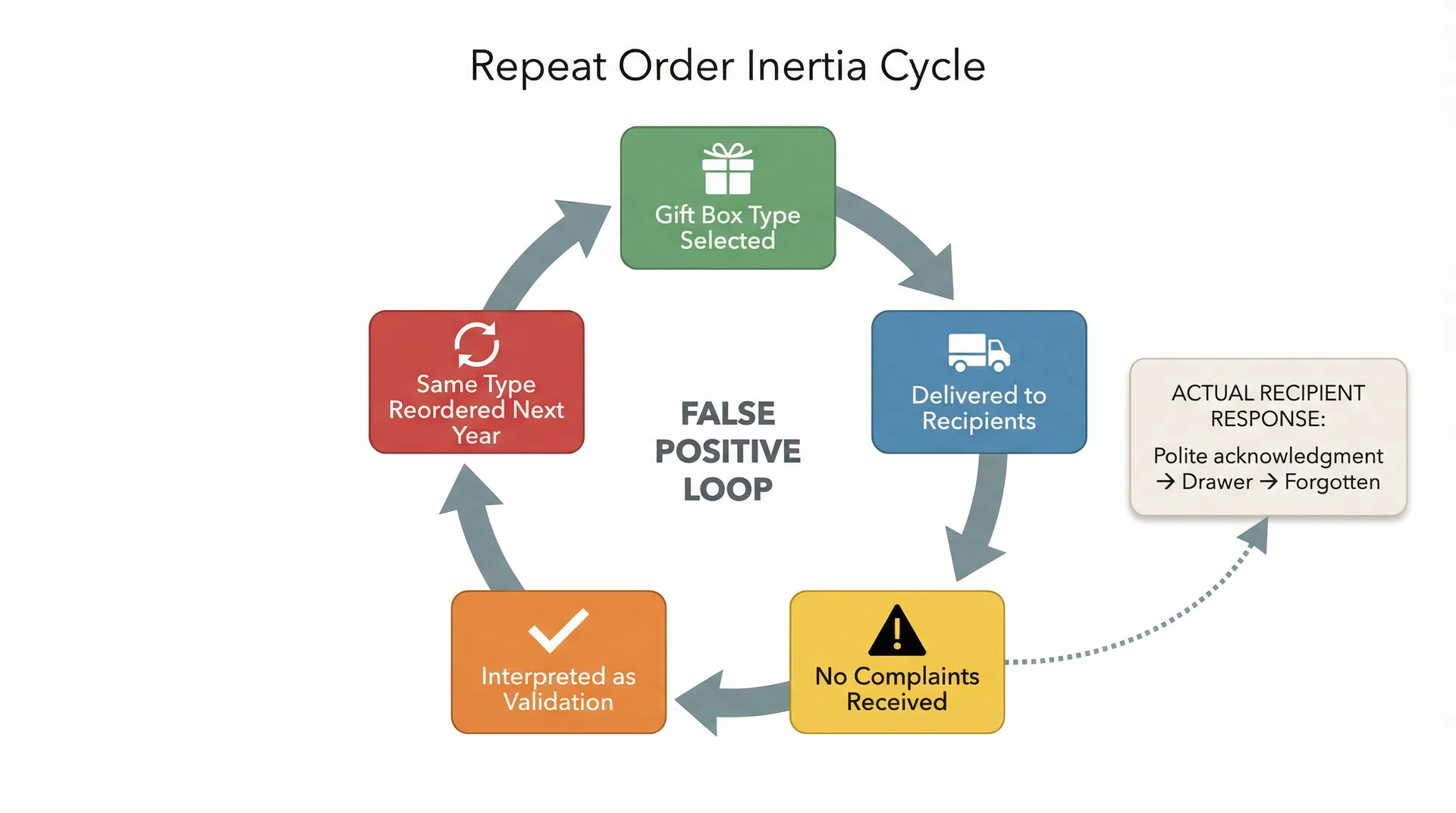
How the absence of negative feedback creates a false signal that the current corporate gift box type is optimal, when in reality it is merely tolerated — and why this pattern compounds in New Zealand's small supplier market.

Why the structure of a corporate gifting budget — specifically the per-unit figure handed to procurement — systematically eliminates certain gift box types before anyone evaluates whether those types would have been the right choice for the business objective.

How procurement teams evaluate corporate gift box types based entirely on the unboxing moment, while the actual value — or waste — of that type decision plays out over the following weeks and months in ways nobody tracks.

How procurement teams collapse an entire year of corporate gifting occasions into a single gift box type order, ignoring that the same type performs completely differently depending on when it is delivered — and why New Zealand's reversed seasons make this problem structurally worse.

Why corporate gift box type selection in New Zealand consistently fails when procurement teams build a single idealised recipient profile instead of accounting for the actual diversity of the people who will receive the gift — and how this creates a structural mismatch between the gift type chosen and the contexts in which it will be opened.

Why the person who approves a corporate gift box type inside the organisation is rarely the person best positioned to judge whether that type will perform with the actual recipients — and how this structural gap produces gifting programmes that satisfy boardrooms but underdeliver at desks.

Why the corporate gift box type that works at 30 units often becomes structurally unviable at 200 — and how failing to recognise this transition point leads to quality degradation that nobody planned for.

How the default approach to corporate gift type selection — treating all business occasions as interchangeable — quietly undermines the return on gifting spend in New Zealand organisations.

Why material specifications in corporate gift box customization are routinely overlooked, creating compliance risks that surface only after production is complete.

Why the proof approval stage in corporate gift box customization is where most projects silently derail, and how the gap between a sample and production output is routinely underestimated.

Understanding why minimum order quantity decisions in corporate gifting often fail at the component level, not the box level. A procurement perspective on navigating MOQ constraints.

An analysis of supply chain realities when sourcing New Zealand-made corporate gifts at volume. Discussing lead times, artisan capacity, and the trade-offs between authenticity and standardization.